I opened up a Behringer Pro VS Mini so that you don’t have to.
The unit can be easily opened through the four black Philips screws at the bottom and the four hexagon metal ones on the face plate. There also screws on the PCB which allow the face plate to be detached from it.
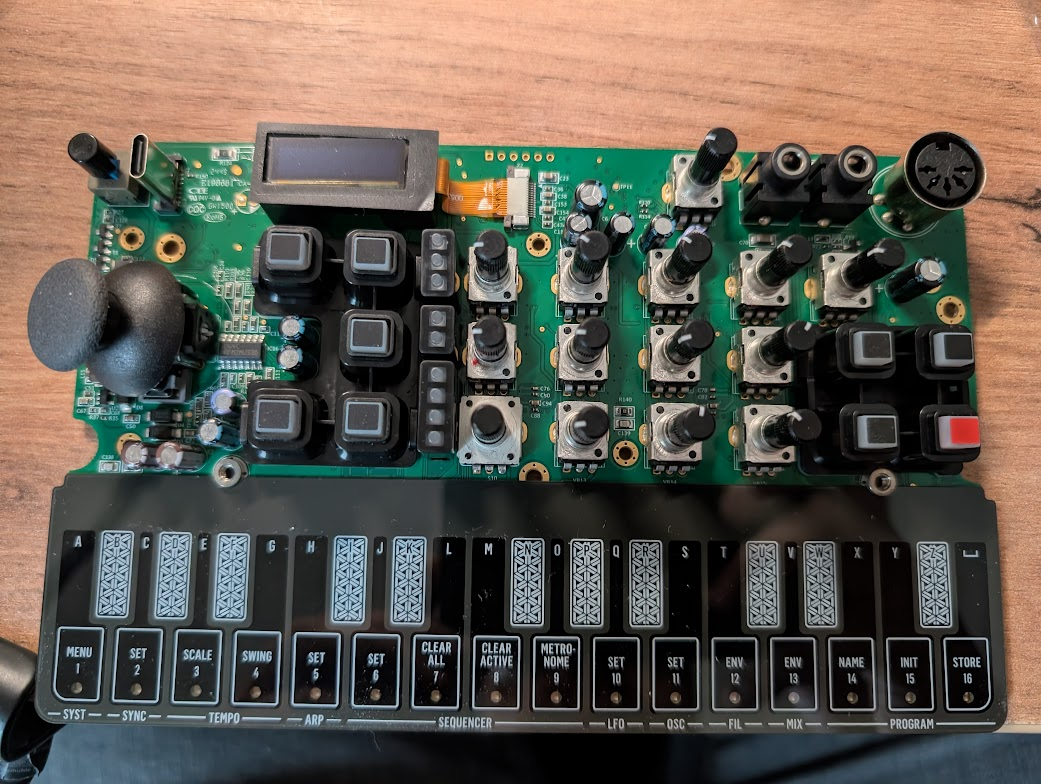 The SMT electronics are all on the backside, while the front side holds the though-hole potentiometers and joystick, as well as the tactile buttons, power button, jacks, joystick and LEDs.
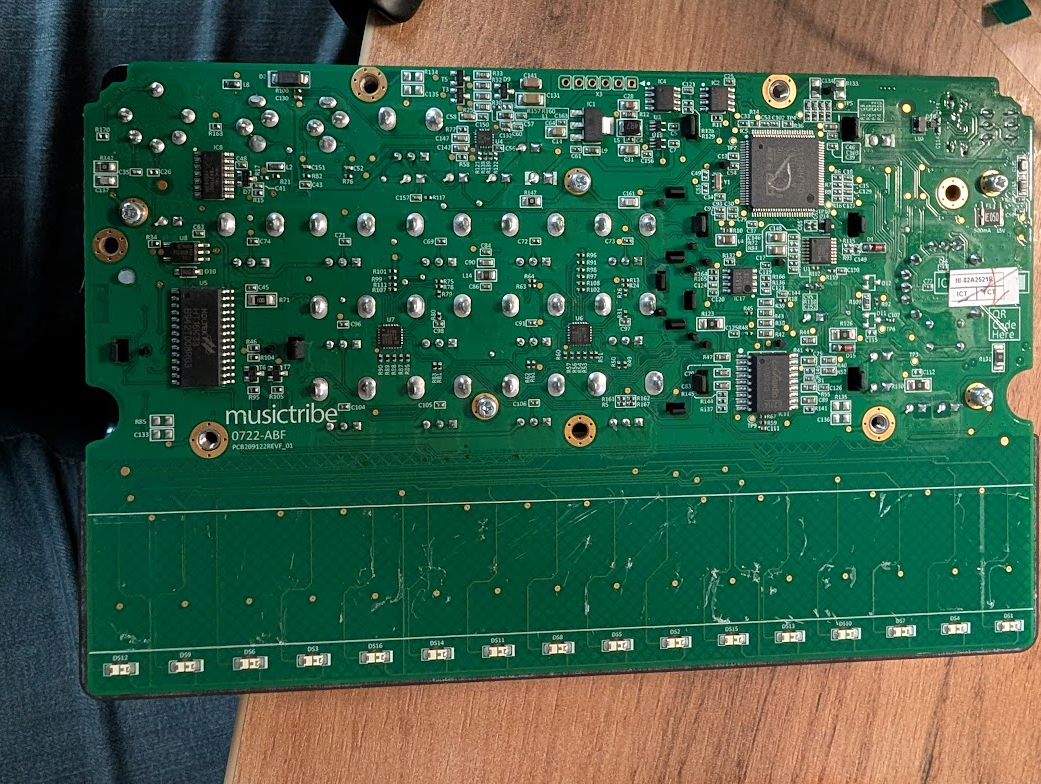 A few key components can be easily identified:
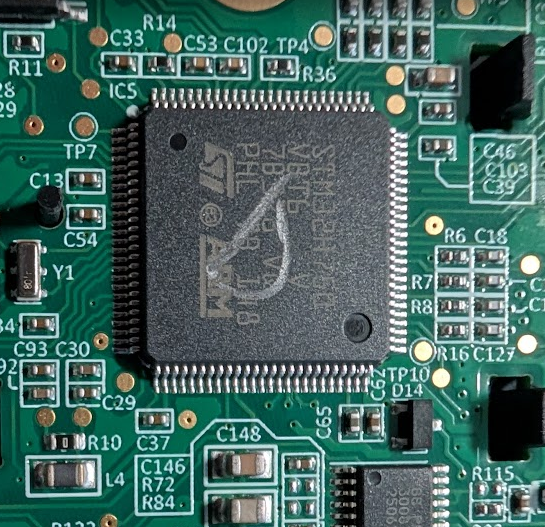
- STM32H750VB - a well known ARM Cortex-M7 32-bit processor
- PCM3008T - a stereo codec
- Coolaudio V3320 - a drop-in replacement for the famous Curtis CEM3320 chip, used in some of the most legendary vintage synthesizers (some from the Prophet and Oberheim lineages)
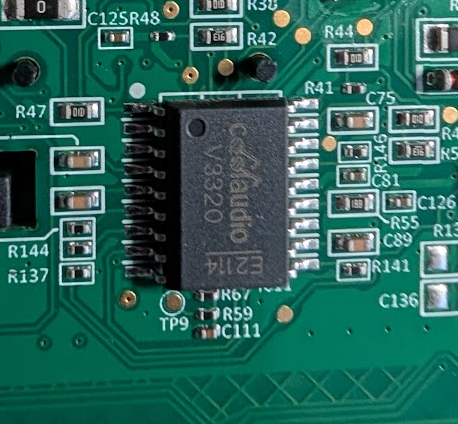
- Winbond 25Q16JVN10 - a 16 Mb Serial Flash - probably storing (part of) the firmware?
- 24256E - Seems to be an M24256E, a 256Kb I2C EEPROM. Maybe for configuration parameters?
- TLP2368 - An optocoupler, used for the MIDI IN interface
- CY8CMBR311 - a capacitive touch controller IC. There are actuall two of those
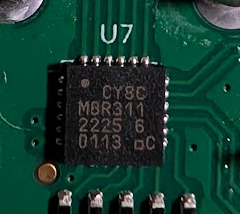
- Holtek HT16K33 - an LED controller driver
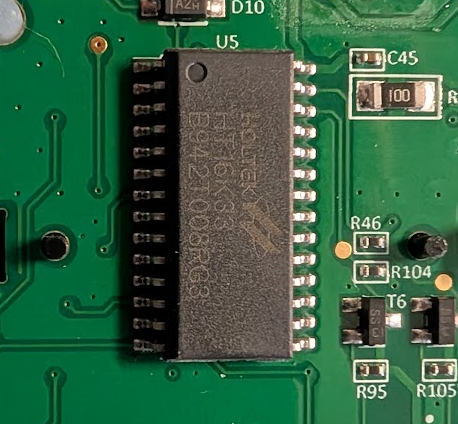
- 4580R - An op-amp, not sure what it’s being used for
- 74HC14D - a hex inverter with Schmitt trigger inputs, probably used to interface between 3.3V and 5V levels
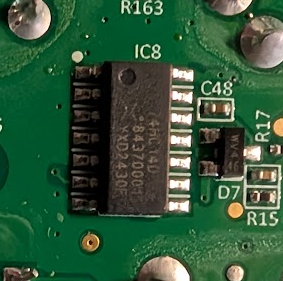
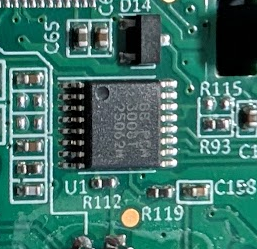
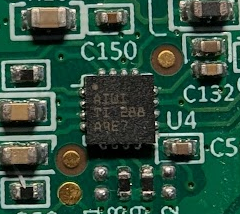
- This mystery IC, which
I suspect might be a TL288 in a tiny packageaccording to someone on ModWiggler is a TPA6132A2, a headphone amp
SWD Interface
There are pins conveniently placed on the board, for programming. I managed to trace them back to the MCU.
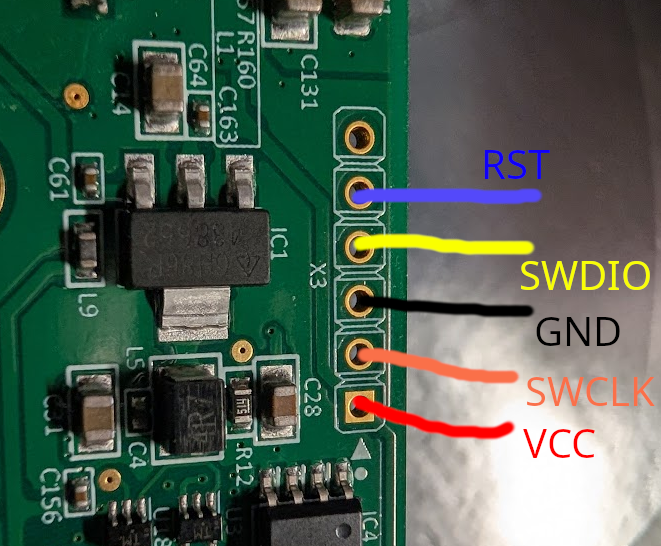
STLink recogizes the chip. Unfortunately, reading the contents of the flash results in an all-zero file, which suggests that RDP is enabled.
$ st-info --probe
Found 1 stlink programmers
  version:    V2J28S7
  serial:     30FF74065242383907xxxxxx
  flash:      131072 (pagesize: 131072)
  sram:       131072
  chipid:     0x450
  dev-type:   STM32H74x_H75x
Conclusion
The Pro VS Mini looks like a very capable 32-bit ARM embedded platform, with all it takes to take in MIDI and produce high quality audio. It is basically a VST in a box, with the exception of the VCF, which is indeed analog.
I haven’t got the time to dig deeper into this (it might be interesting, for instance, to try to dump the contents of the flash chips), but thought I’d share the little I’ve found out with those interested.